The following is in response to Surjeet Baidman’s article “A light in the dark – Black consumer motivation in dark tourism“:
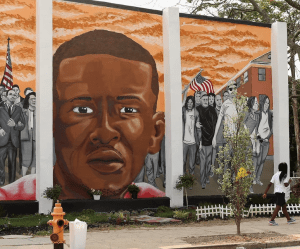
While many peer-reviewed articles covering the subject of dark tourism largely reflect on the community’s exciting traits and suggesting new perspectives on preconceived ideas, Surjeet Baidman explores the potential application of dark tourism on urban America during tragedies of the modern day. Baidman, who is currently an Assistant Professor and Program Director at Mount Saint Mary’s University in Los Angeles, is no stranger to talking about dark tourism. With having also written about dark tourism and Marilyn Monroe’s gravesite, Baidman’s published thoughts on the impact of 25 year old Freddie Gray’s death in 2015 led to being invited as a guest speaker in 2021 by Purdue University.
The intention of Baidwan’s article, “A light in the dark – Black consumer motivation in dark tourism”, is to suggest that locations with trauma in urban American communities could also be considered dark tourism sites. Specifically surveying individuals from Baltimore, MD in the wake of police brutality ending Gray’s life, 3 distinct behavioral patterns are suspected to exist among the African American demographic. It is Baidman’s observation that these behavioral traits are in response to visiting sites of tragedy amidst the Black Lives Matter movement, and subsequently forces existing beliefs about Dark Tourism to be reconsidered.
After first introducing the emergence of the “Dark Tourism” community by revisiting the initial publications of Malcolm Foley and John Lennon, the phenomenon aspect of dark tourism as a hobby is challenged against personal connection and “lived experiences of dark tourism consumers” (Baidwan 2022). This acts as a preface for the context of Baidwan’s observation on complicated emotions among the African American community towards police.
Black Lives Matter has been relevant movement for almost a full decade, beginning in the aftermath of George Zimmerman being acquitted for the fatal shooting that claimed Trayvon Martin’s life (Black Lives Matter Movement, n.d.). Baltimore’s reaction as a community to Freddie Gray’s death only a few years later prompted a survey to be conducted. Baidwan’s survey included 10 individuals with the majority being around the same age as the victim. It was an intentional strategy to interview a small group a people, with the purpose being to “having enough time to develop deep trust and sufficient resources to provide counseling support as needed…” (Baidwan 2022). This methodology is already unique to the situation compared to visitors of other dark tourism sites, and this could possibly be due to the ongoing nature of the trauma versus the eventual historical significance it will have years from now.
The results of the study found that there were 3 common traits among the survey group. These traits including sharing thoughts and feelings with their community, paying respects, and increased understanding of reality and the events that took place. These are attributes that can be applied to many dark tourists, especially if they travel to a site where sacrifice of life and/or liberty occurred. However, the argument that black dark tourists interpret their emotions and reasoning to travel to these locations differently is plausible due to their “struggle for fairness and equal treatment is a centuries old ongoing struggle” (Baidwan 2022). The existence of individuality and the acknowledgement of one’s own ancestry and culture is a necessary trait for members of the dark tourism community. When the “phenomena” aspect that has been emphasized on begins to fade, the emotional and historical aspects will continue to draw in visitors.
Work Cited:
Black Lives Matter Movement. (n.d.). A Brief History of Civil Rights in the United States: The Black Lives Matter Movement. https://library.law.howard.edu/civilrightshistory/BLM
Somodevilla, C. (2015). A mural memorializing Baltimore resident Freddie Gray adorns a wall near the place where he was tackled and arrested by police (Photo). NPR. https://www.npr.org/sections/thetwo-way/2015/09/09/438844603/baltimore-approves-6-4-million-settlement-with-freddie-gray-family
Surjeet, B. (2022, June 30). A light in the dark – Black consumer motivation in dark tourism, Journal of Teaching in Travel & Tourism, 22 (3). pp 312-324. https://doi.org/10.1080/15313220.2022.2098221
(This post was originally published as “blog #4” for my INfo 200 course on information communities)
 The Shadow Route